It’s hard to believe that Midjourney only debuted online in 2022.
Since then, it’s become the gold standard in AI image generation with consistent, highly detailed images in almost any style imaginable.
But did you know there are viable Midjourney alternatives?
In this article, I’ll outline the 7 best Midjourney alternatives based on image quality, price, accessibility and more.
Let’s dive right into the world of Midjourney alternatives. 🤖
Why Use a Midjourney Alternative?
Suppose you use Midjourney to generate an image. As you’ll likely discover, it works remarkably well.
So, if you can consistently get images that you like from Midjourney, why use an alternative image generator? Why not keep using Midjourney?
There are three primary reasons why you should consider an alternative.
-
Price: The first and, perhaps, most obvious reason is price. Midjourney has no free plan at all, so even casual users pay at least $10 a month. If you use Midjourney often, you’ll want your own AI image generator. Imagine being free to generate hundreds of images for just the cost of your home electricity and internet. It’s possible with an alternative!
-
Style: While Midjourney is incredible, it’s not perfect. You might want some images you can’t get with this tool, no matter what Midjourney prompts you try. For example, an alternative could potentially produce a better landscape image.
-
Features: Other platforms have some features that Midjourney doesn’t. For example, some alternatives have an API you can call to generate an AI image automatically, while Midjourney’s terms ban automated tools. That might be useful for your application.
Midjourney is a truly impressive offering. However, that doesn’t mean it has everything you need, and that you shouldn’t explore alternatives to see if another one better suits your artistic needs.
What Are the Best Midjourney Alternatives in 2026?
There’s now a huge range of AI image generators. When I first wrote this, most of them were different interpretations of Stable Diffusion (more on that later). Now the big players like OpenAI, Google and Adobe have their own models, and apps like Leonardo let you pick from several.
Here’s a quick comparison of the top options for those stuck for time:
Comparing the Top Midjourney Alternatives
| Tool | Free option | Cheapest paid plan | Best for |
|---|---|---|---|
| Midjourney (for reference) | None | Basic: $10 a month ($8 billed yearly) | Stylish, great-looking images |
| Leonardo | 150 fast tokens a day | Essential: $12 a month ($10 billed yearly) | Lots of models and tools in one app |
| Adobe Firefly | Limited free daily generations | Firefly Standard (2,000 credits a month) | Photoshop users and commercially safe images |
| ChatGPT Images | Limited image creation on the free plan | ChatGPT Plus: $20 a month | Editing images by chatting |
| Stable Diffusion and FLUX | Free to download and run on your own PC | None needed (you supply the hardware) | Privacy, control and unlimited images |
| Ideogram | 30 credits a week | Plus: $20 a month ($15 billed yearly) | Text in images, logos and posters |
| Google Gemini | Free with daily limits | Google AI Plus: $4.99 a month | Free photo edits and text in images |
| Bing Image Creator | Free with a Microsoft account | None needed | Quick free images |
1. Leonardo AI
Leonardo AI is a fantastic AI image generator that started out as an easy and intuitive way to run Stable Diffusion models. It now has its own models (Lucid Origin and Phoenix) and lets you use third-party ones like GPT Image, FLUX, Nano Banana and Seedream from the same screen. Design platform Canva bought Leonardo in July 2024.
One of Leonardo AI’s biggest strengths is its intuitive UI. The designers have made using a very complex set of features remarkably easy.
Leonardo AI also offers numerous styles, including cinematic, retro, creative, and even HDR. You can add “Elements,” like CGI Noir or “Toon & Anime.”
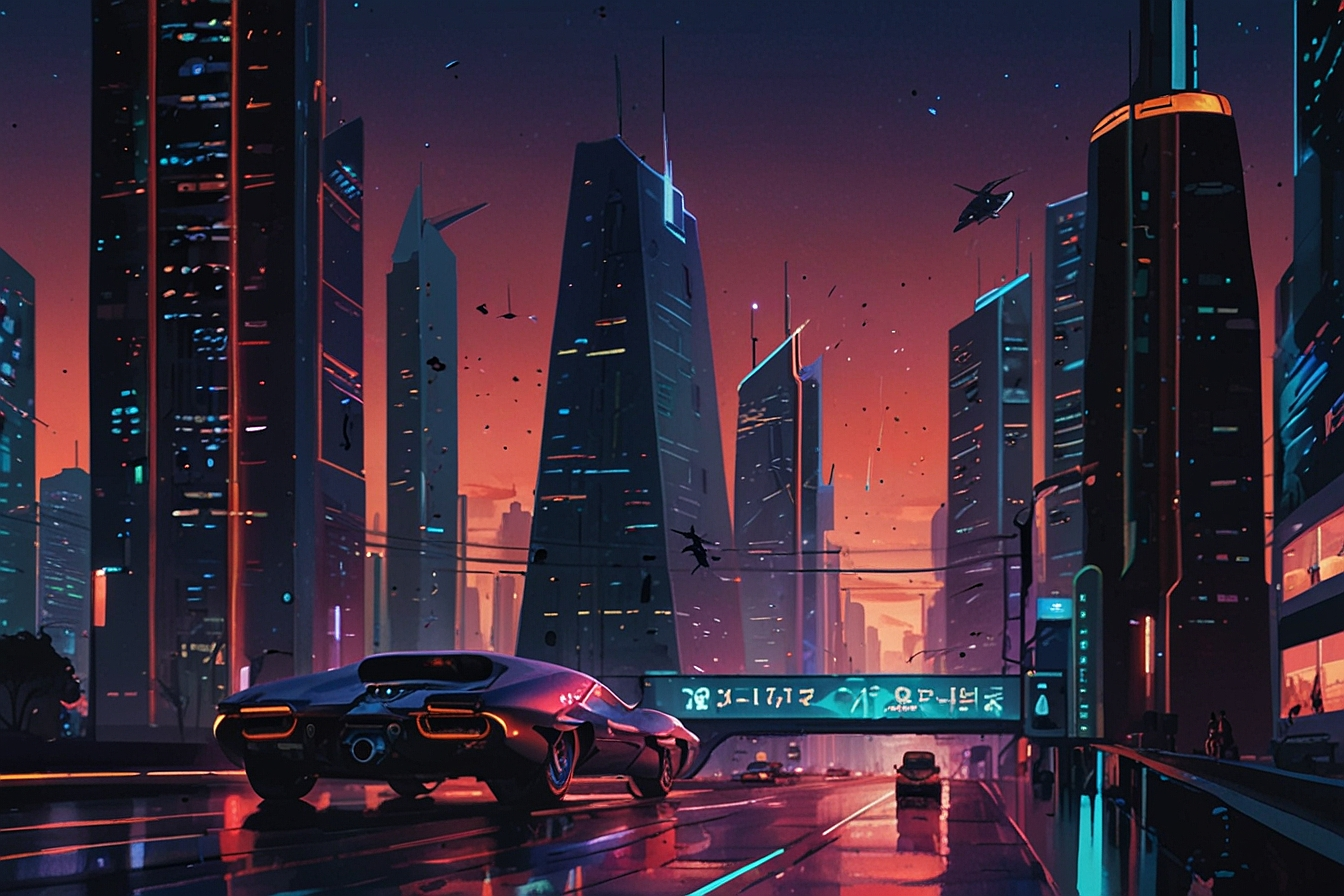
With all these features, you can drill down and hone in on the precise image you want.
Key Features
-
Image Generation: With Leonardo AI, there’s a world of possibilities. You can also select any style from multiple resolutions, making it an all-encompassing image tool.
-
Easy Interface: The designers behind Leonardo AI produced a straightforward interface that makes creating the image you want remarkably simple.
-
Multiple Models: Leonardo’s own models sit alongside third-party ones like GPT Image, FLUX, Nano Banana and Seedream, so you can find the model you need to generate your desired image.
-
Image Feed: Leonardo’s public image feed inspires. You can see the resulting image from a model and prompt combination, allowing you to learn how to create better images yourself.
-
Prompt Generator: Leonardo’s built-in AI prompt generator makes it easy to create a good prompt – even if you don’t have the words to do so immediately.
-
Unique Features: Leonardo has a bunch of unique features including video generation (with models like Google’s Veo and Kling), Realtime Canvas, a Pro Upscaler, inpainting, and one-click Edit in Canva.
Pricing
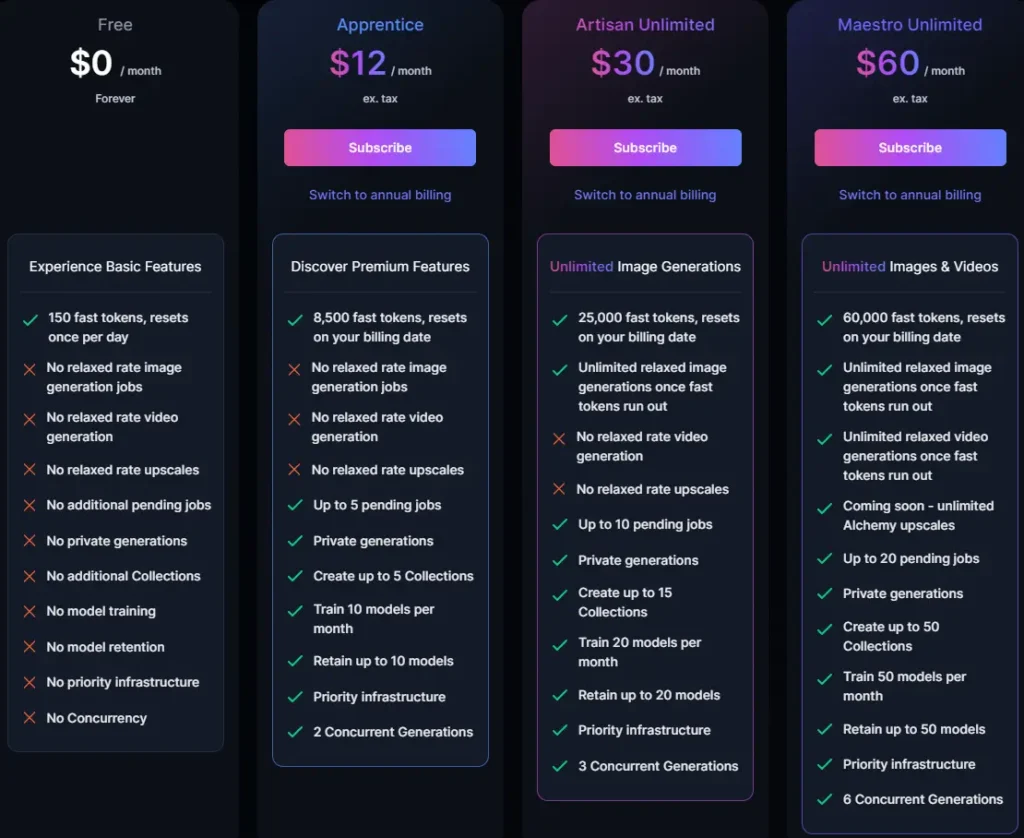
That screenshot shows Leonardo’s old plan names. The tiers have since been renamed, but the token amounts are the same. Leonardo AI offers four pricing tiers:
-
Free: Gives 150 fast tokens a day, and everything you make is public.
-
Essential: Gives 8,500 fast tokens a month, private generations and 2 generations at once for $12 a month, or $10 a month billed yearly.
-
Premium: Gives 25,000 fast tokens a month plus unlimited relaxed image generation on select models once the fast tokens run out, for $30 a month or $24 a month billed yearly.
-
Ultimate: Provides 60,000 fast tokens a month plus unlimited relaxed image and video generation on select models, for $60 a month or $48 a month billed yearly.
2. Adobe Firefly
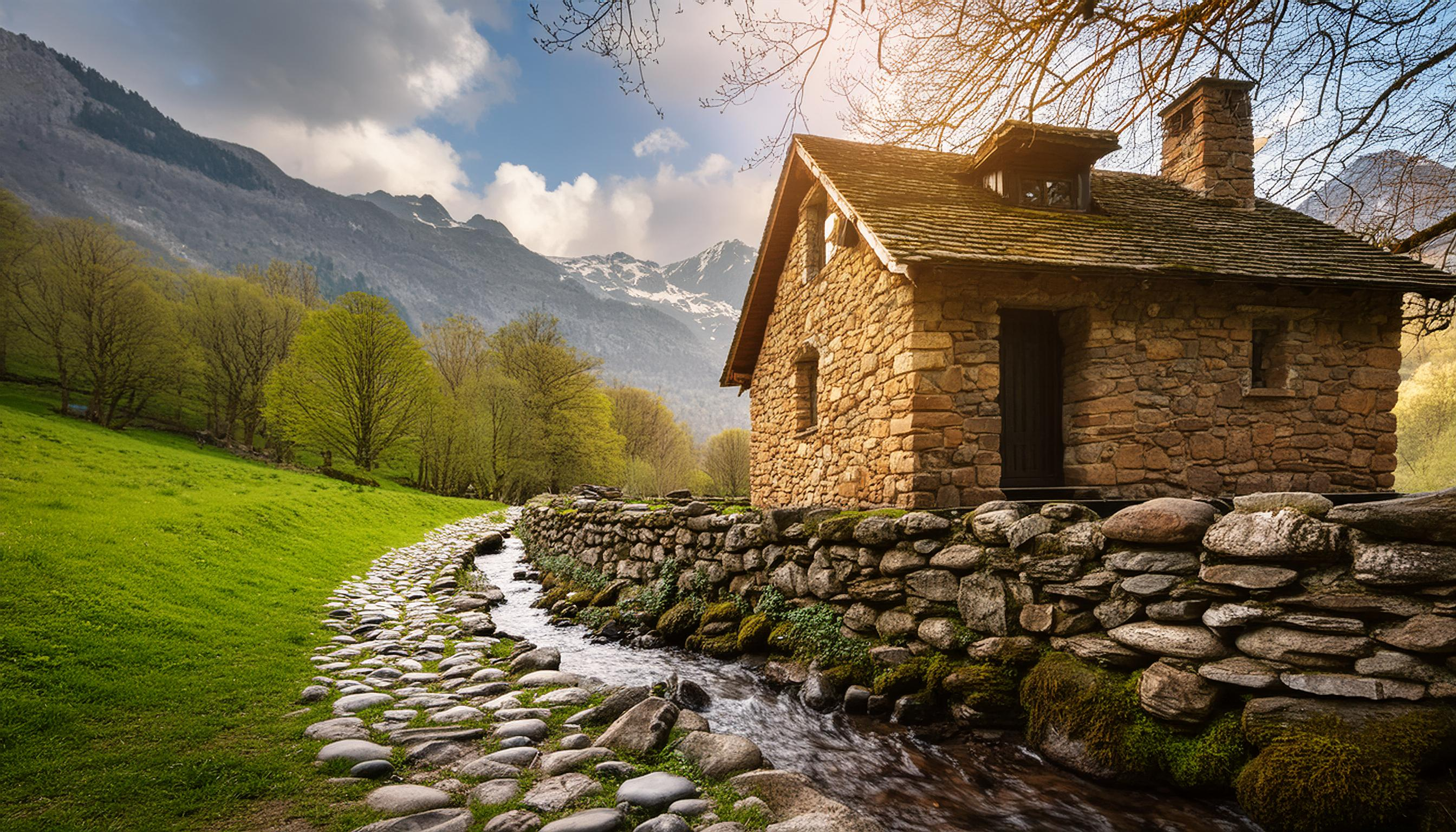
Most people know how powerful Adobe Photoshop is.
What most people don’t know is that Adobe has entered the AI space with an impressive image generation tool – Adobe Firefly.
Adobe’s own latest model is Firefly Image 5, and the Firefly app now also includes partner models like OpenAI’s GPT Image, Google’s Nano Banana and FLUX, plus video and audio models.
You get a lot of control with Firefly. You can choose from multiple aspect ratios and content styles and even upload images for Firefly to reference when creating your brand-new image.
One of Firefly’s best aspects is that it references concepts in a way that feels natural to photographers.
Instead of putting something like “shot from above” in your text prompt, choose the “shot from above” camera angle.
Each of these options is also a dropdown. Therefore, you can get a quick glimpse of everything that Firefly supports. You can see all the lighting choices, camera angles, and color options.
If you’re a photographer and you want to use an AI generator that feels familiar, Adobe Firefly is likely your best bet. And if it’s not quite right for you, I’ve also rounded up the best Adobe Firefly alternatives.
Key Features
-
Familiarity: Adobe Firefly’s options will feel familiar to photographers and people who use Photoshop.
-
Least Technical: Programmers have built many solutions on this list for other programmers. Firefly distills complex concepts into easy-to-understand common terminology.
-
More Effects: Firefly supports countless effects and styles listed as art generation modes. You can make an image in any style you want.
-
Free Daily Generations: Free users get limited free generations every day, and Adobe’s Creative Cloud Pro plan includes 4,000 Firefly credits a month.
-
Commercially Safe: Adobe says its own Firefly models are trained on licensed and public-domain content, and their outputs are safe for commercial use. Partner models don’t come with that promise.
-
Realistic: Firefly generates some of the best artwork of any AI image generator, making it one of the more worthy Midjourney alternatives.
-
Generative Fill: Adobe Firefly was one of the first AI art generators to feature Generative Fill (Inpainting) in their tool.
Pricing
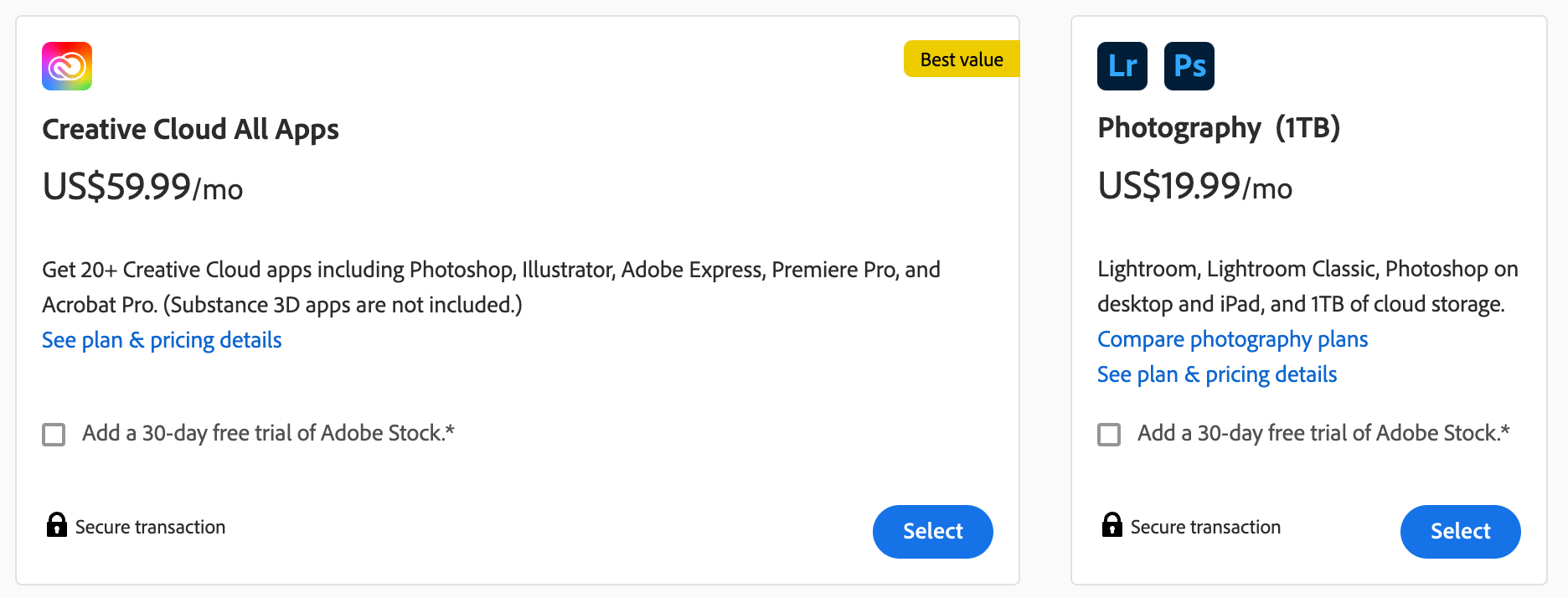
That screenshot shows Adobe’s old credit allowances. Firefly now has its own plans, priced by monthly generative credits:
-
Free: Limited free generations that reset every day.
-
Firefly Standard: 2,000 credits a month, with unlimited standard image features.
-
Firefly Pro: 4,000 credits a month.
-
Firefly Pro Plus: 10,000 credits a month.
-
Firefly Premium: 50,000 credits a month.
Adobe’s prices vary by country, so check Adobe’s Firefly plans page for yours.
3. ChatGPT Images (Formerly Dall-E 3)
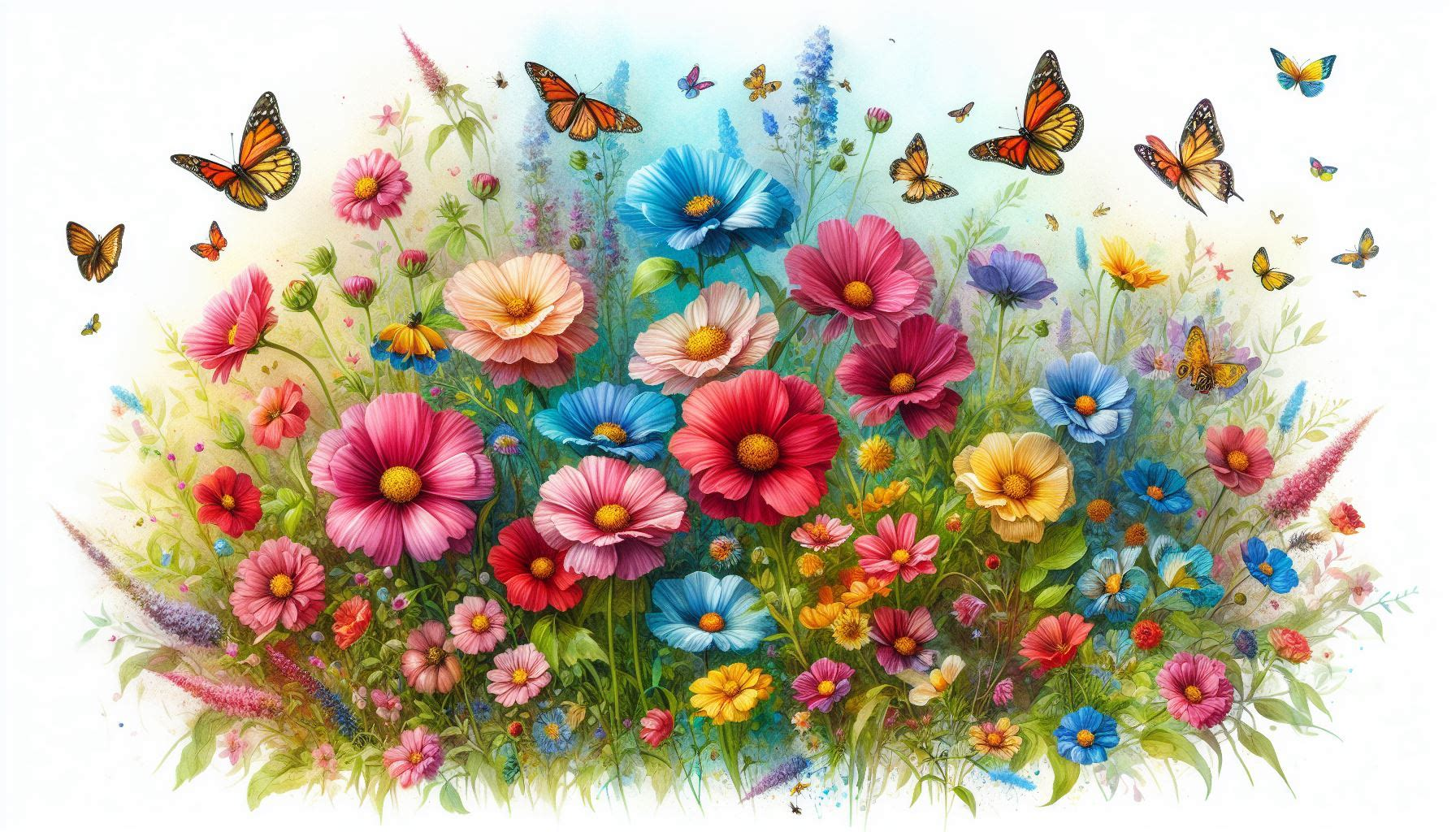
I made this one with Dall-E 3, before ChatGPT switched models.
Dall-E, created by OpenAI (the same company responsible for ChatGPT), was one of the most well-known AI image generators around. OpenAI has since retired Dall-E from ChatGPT and replaced it with ChatGPT Images, now on version 2.5.
Dall-E 3 arrived in late 2023 as the successor to OpenAI’s compelling Dall-E 2 solution.
Opinions vary on the topic but many now consider ChatGPT to be Midjourney’s biggest competitor, simply because so many people already use it every day.
Under the hood, Dall-E 3 was a diffusion model. Diffusion models work by starting with a random noise field and slowly creating an image matching your text prompts.
The link between text and pictures came from a model called CLIP (Contrastive Language-Image Pre-Training). Simply put, CLIP knows the relationship between the text “red apple” and an image with a red apple.
It felt like sci-fi tech, and it worked remarkably well.
Key Features
-
On Every Plan: ChatGPT Images works on every ChatGPT plan, including the free one (with limits).
-
Edit by Chatting: Select part of an image and describe the change, or just ask in the chat. It can also add text, make backgrounds transparent and switch aspect ratios.
-
Quality: OpenAI says version 2.5 brought sharper details, more precise editing and faster image generation.
-
API: If you want to automate image generation, OpenAI sells its GPT Image models through its API.
-
Integrated with ChatGPT: Your images live inside ChatGPT, so there’s nothing new to learn. And a quick pro tip – ask ChatGPT to help you design the best prompt first!
Pricing
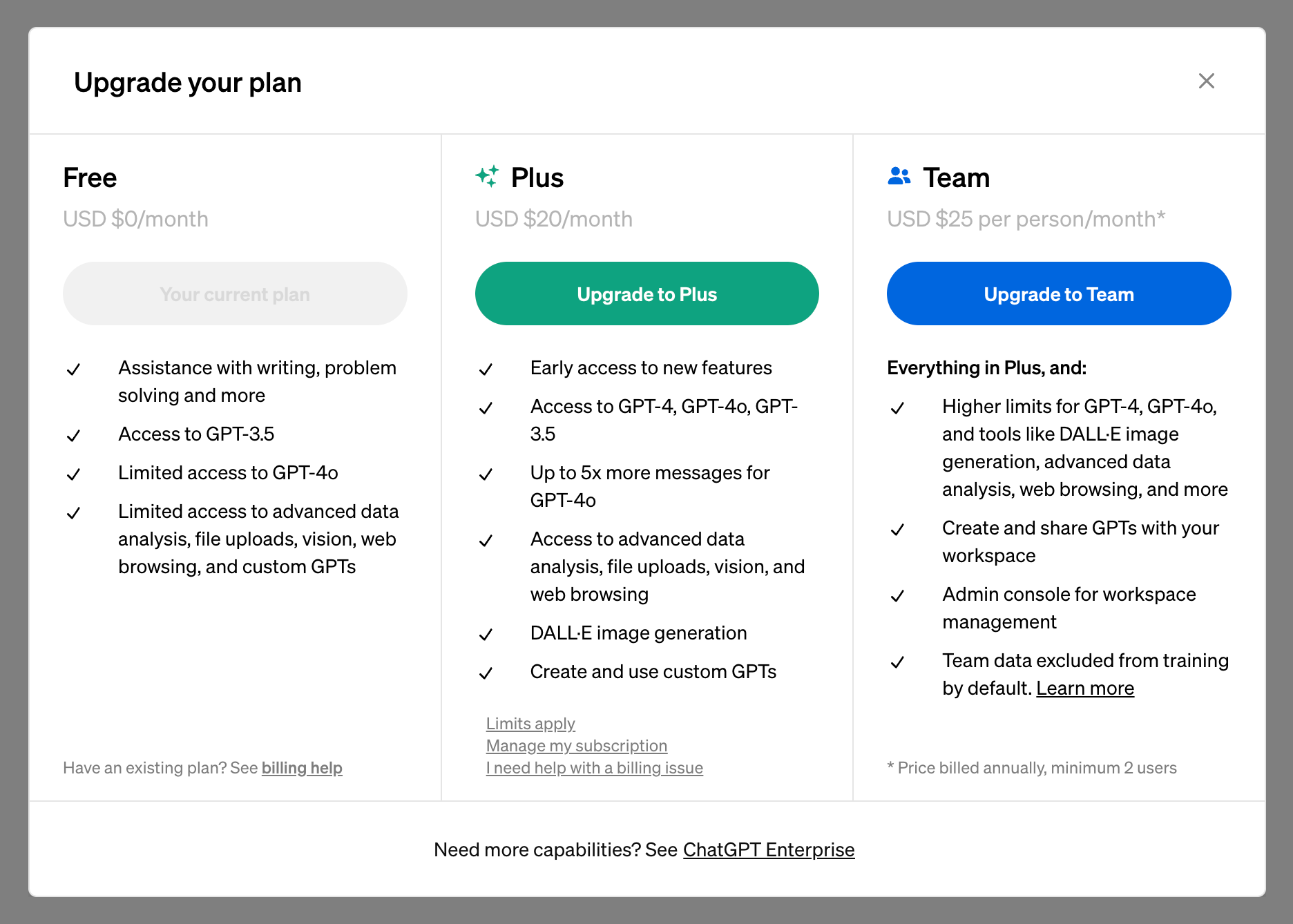
That screenshot is from the Dall-E 3 days, when you needed ChatGPT Plus to make images at all. ChatGPT Images now comes with every plan:
-
Free: Limited image creation.
-
Go: More image creation than Free (the price depends on your country).
-
Plus: $20 a month for more complex and accurate image creation, including images with thinking.
-
Pro: Unlimited and faster image creation.
Technically, you can also pay per image through OpenAI’s API, but since this isn’t comparable to Midjourney, the cost isn’t listed here.
4. Stable Diffusion and FLUX
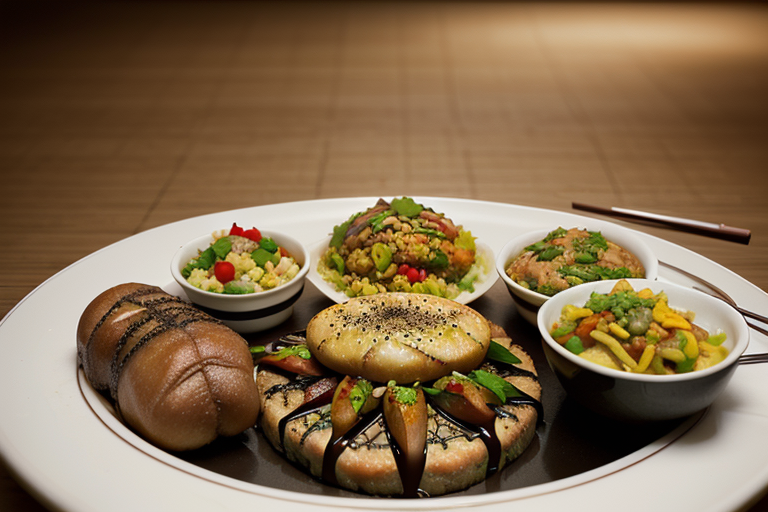
Stable Diffusion is one of the most popular AI image-generation options for many reasons.
The biggest reason is simple to understand: Stable Diffusion’s models are free to download and run on your own computer.
That’s right, free. You don’t need to spend a dime to run it. As long as you have a reasonably decent PC or Mac, you can run Stable Diffusion and get into generating artwork. Stability AI’s community licence is free for individuals and businesses making under $1M a year.
Stable Diffusion’s underlying technology is remarkable.
Stable Diffusion works by refining random noise through a series of steps. Eventually, it refines that random noise into an image matching your description.
Setting up Stable Diffusion can be difficult as it needs to run locally on your machine, but there are heaps of tutorials online showing how to do it.
Stable Diffusion has company these days. Stability’s latest family is Stable Diffusion 3.5, and Black Forest Labs publishes open weights for some of its FLUX models (like FLUX.2 [dev]) that you can run the same way. Using FLUX’s open weights commercially needs a licence from Black Forest Labs.
Key Features
-
Price: It’s free!
-
Models Are Abundant: No matter what image style you want, there’s a model online that can do it – and usually, it’s free to download.
-
Powerful: Though the UI may look complex, it’s remarkably powerful, and you can do almost anything AI-related.
-
Train Your Models: You can train your own models based on your data since this is an open platform. Use existing images to build your very own AI tools.
-
Runs Locally: Unlike many other solutions, Stable Diffusion runs locally. Nobody will know about the images you generate. If you value privacy, Stable Diffusion is your best bet. You have unlimited image generation at your fingertips.
Pricing
It’s free for personal use and small businesses! Anyone can set it up by following these instructions for the classic AUTOMATIC1111 web UI, or try ComfyUI, which is updated far more often and supports newer models like Stable Diffusion 3.5 and FLUX.2.
5. Ideogram
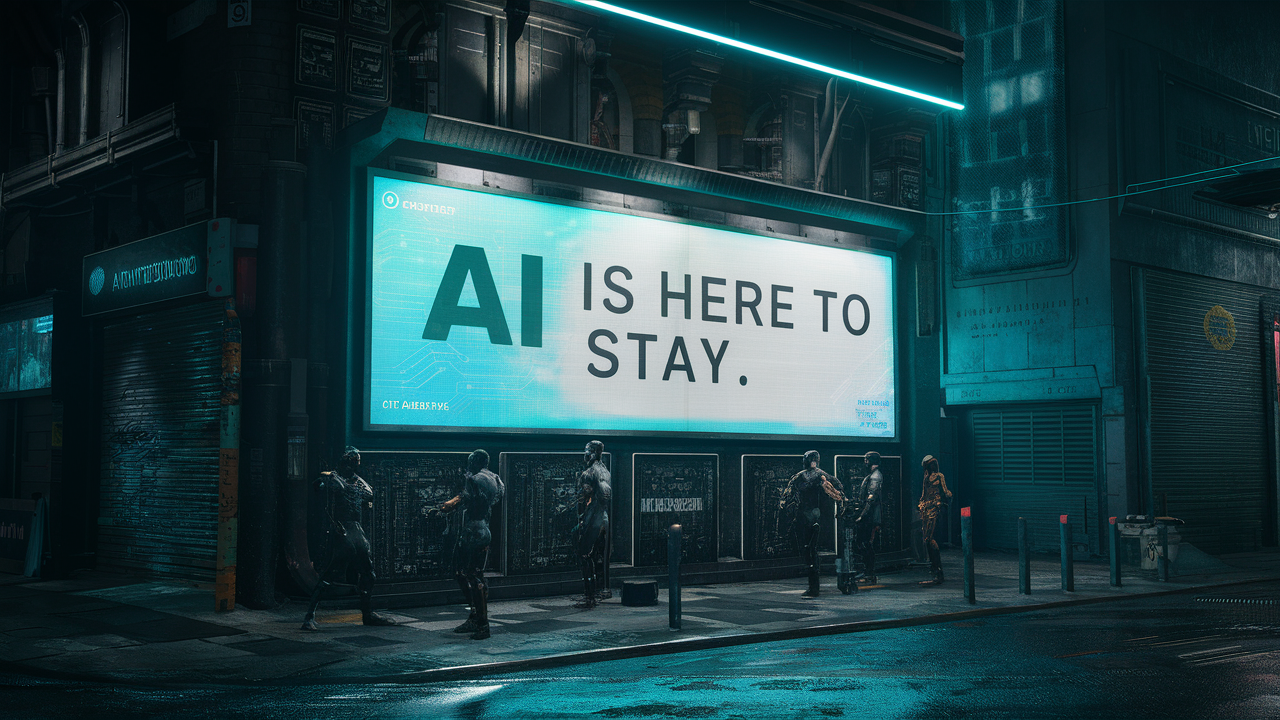
Ideogram has become one of the top Midjourney alternatives available.
Ideogram is fantastic for a few reasons, but a large part of its popularity is that it’s one of the few AI image generators that renders text remarkably well.
A couple of years ago, most AI image generators struggled with really legible text. ChatGPT, Gemini and Midjourney’s newer models have caught up a lot, but if you grab an old Stable Diffusion model, you’ll almost assuredly get gibberish if you try to render text.
Ideogram is entirely different. It can render legible text alongside some pretty awesome AI art too. Its newest model is Ideogram 4.5, and Ideogram 4.0 is open-weight, so you can even download it and run it yourself.
A new company logo? Yep, legible text with Ideogram. Do you have an idea for a T-shirt? Give it to Ideogram and it will give you an image back with your idea with readable text.
Key Features
-
High Quality: Besides rendering text well, Ideogram produces extremely high-quality imagery.
-
Free Tier: Free accounts get 30 credits a week when you sign in with Google, Apple or Microsoft.
-
Image Explorer: Use Ideogram’s image explorer to find inspiration for your next image. You can browse what others have made and view the associated prompts.
-
Multiple Styles: Ideogram excels at both abstract and realistic images.
Pricing
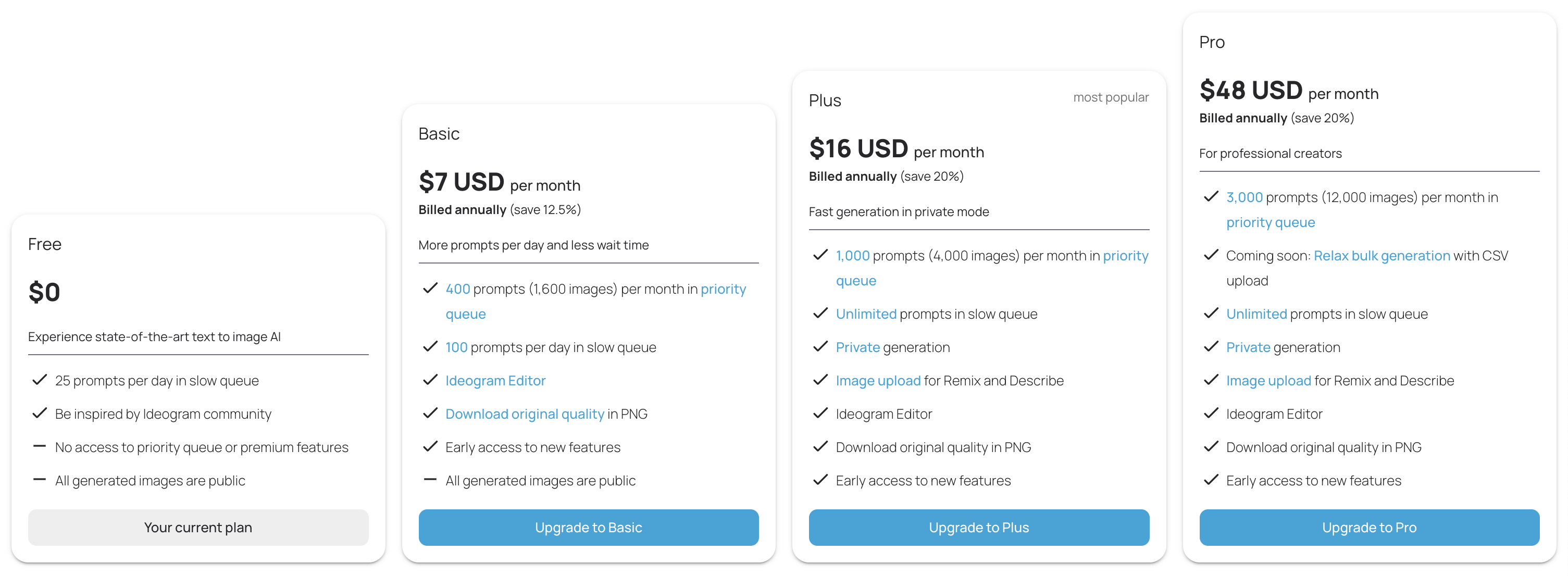
That screenshot shows Ideogram’s old plans. The Basic plan is gone and prices have changed. Ideogram now has four main tiers:
-
Free: 30 credits a week. Images generated in this tier are public.
-
Plus: 2,400 credits a month for $20 a month, or $15 a month billed yearly. Images stay private until you publish them, and you can keep generating with Ideogram’s models in a slower queue when your credits run out.
-
Pro: 7,500 credits a month for $60 a month, or $42 a month billed yearly. Images are private like the Plus option.
-
Team: 3,600 credits per user a month for $30 per user, or $20 per user billed yearly (minimum 2 users).
6. Google Gemini (Nano Banana)
BlueWillow used to sit here, but its site now just funnels you to LimeWire’s AI studio, so I’ve swapped in Google Gemini.
Google’s image model goes by the cheeky name Nano Banana, and it lives inside the Gemini app. It’s free to use with daily limits, which makes it one of the easiest Midjourney alternatives to try.
Where Gemini shines is editing. Upload a photo and ask it to turn day into night, change the camera angle, or restyle your subject using another image as a reference. You can also combine two photos into one.
It’s handy with words too. Google pitches it for logos, invites, posters and comics with clear text in many languages.
Pay for a Google AI plan and you unlock Nano Banana 2.1, which Google calls its most advanced image model, plus higher limits.
Key Features
-
Free: Image generation and editing are included in Gemini’s free tier, with daily limits.
-
Photo Editing: Change the lighting, camera angle or style of a photo, or blend two photos, just by describing what you want.
-
Text in Images: Clear text for logos, posters and invites, in many languages.
-
Resizing: Resize an image to fit different formats without cropping out the details.
Pricing
Google’s AI plans cover Gemini, image generation and more:
-
Free: $0 with a Google account, with daily limits.
-
Google AI Plus: $4.99 a month for 2x the free usage limits, plus video generation.
-
Google AI Pro: $19.99 a month for 4x the free limits, 5 TB of storage and Gemini in Gmail and Docs.
-
Google AI Ultra: From $99.99 a month for the highest limits.
7. Bing Image Creator
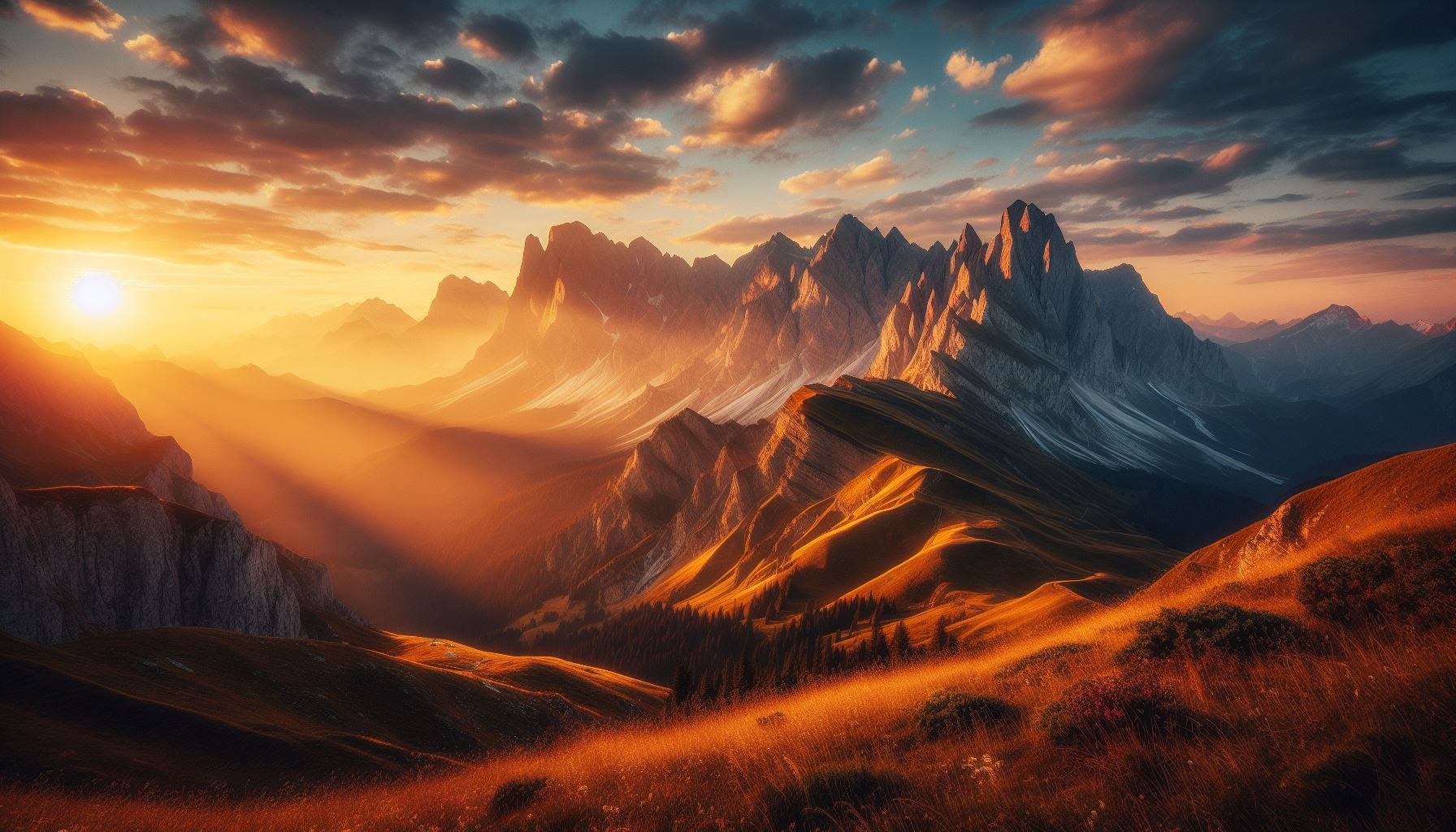
Microsoft has been remarkably vocal about its support for AI. It has made significant investments in OpenAI and now builds its own image models too.
The Bing Image Creator is their primary image generation offering.
Bing Image Creator launched on OpenAI’s Dall-E 3, thanks to Microsoft’s collaboration with OpenAI. It now also offers Microsoft’s own MAI-Image models, which you pick from the Mode menu.
The Bing Image generator is easy to access and free. Go to Bing Image Creator, type what you want, and hit Generate. Sign in with a Microsoft account and you get 10 free creations in Fast mode, then unlimited creations in Standard mode.
Key Features
-
Price: Like some of the other models in this post, this one is free. And who can argue with free?
-
Quality: Microsoft’s MAI-Image models give you a choice between detailed, dynamic images and quick stylized art.
-
Styles: When I tested it, Bing’s image generation excelled at understanding styles. You can ask for an image in the style of Rembrandt, and it will give it to you nicely.
-
You Can Use Your Microsoft Account: If you already have a Microsoft account (say for Xbox), you can sign into Bing for image generation. That’s one less account you may have to make.
-
Video Too: The same page links to Bing Video Creator for short AI videos.
Pricing
Bing Image Creator is free to use, unlike some other image generation models! Microsoft Rewards points can also get you free upgrades.
What Makes a Good Midjourney Alternative?
What makes for an excellent Midjourney alternative? Or, more succinctly, why did the platforms above make the list?
There are three key features of a good Midjourney alternative.
Speed Is Required in an AI Image Generator
Midjourney is fast. One of the most significant advantages of AI is that it can generate numerous AI art images within a short timeframe.
Many artists and creators create tens or hundreds of images at once. They select the best of those images to augment and enhance.
Any Midjourney alternative must be equally speedy or speedier.
That’s one reason Stable Diffusion made it on the list. With the proper hardware, Stable Diffusion can quickly generate hundreds of variations of your requested image.
You can select the best one and inpaint or modify it as necessary.
That’s the type of workflow that will help you arrive at your desired image as fast as possible.
Any AI Image Generation Must Have Quality
Midjourney produces fantastic-looking images, but it doesn’t make every picture perfect. Other AI image-creation services excel at certain styles and concepts.
Any alternative should produce high-quality images that give Midjourney a run for its money. Furthermore, they should be able to draw different styles to enable concepts and ideas that Midjourney cannot support.
Bing Image Creator, for example, satisfies this criterion. It produces stellar images that have a slightly different twist from Midjourney.
Many AI graphics designers use more than one service. They may check Midjourney’s output and compare it with something else. Any alternative should produce images of equal or more outstanding quality. Otherwise, Midjourney will always win.
It Should Be Easy to Create AI Art
Lastly, any alternative needs to be simple to use. Most of the tools above have an easy user interface that lets you start generating AI artwork as quickly as possible.
It’s about more than just a nice-looking interface, though. You need to be able to specify parameters and provide the AI generation service enough context to get the image you want.
The problem is that some Midjourney alternatives make that incredibly complex. You shouldn’t need to be an expert in generating images to produce high-quality artwork.
The tools above make generating artwork as simple as providing a concept.
With most of these tools, you only need to tell the AI what you want, and it will create some concept art for you. There’s nothing fancy about it!
Midjourney is simple – comparable alternatives have to be simple, too.
Midjourney Alternatives: Final Thoughts
The AI era is undoubtedly one of the most exciting times in technology.
The rise has given everyone the ability to create incredible images. It doesn’t matter if you are a skilled artist or someone who can’t even draw a stick figure – AI tools let you generate images that look fantastic.
Midjourney was ubiquitous with AI graphics creation. As the seven alternatives show above, that’s no longer the case. Many competitors can now create images that are equally as good or better when compared to Midjourney.
The best part is that many of these alternatives are cheaper than Midjourney – some are even free.
There’s a Midjourney alternative for you, no matter what image you’re looking to generate. Check out some options above yourself to see just how powerful they are! And if you’re still weighing up the original, read my full Midjourney review.